
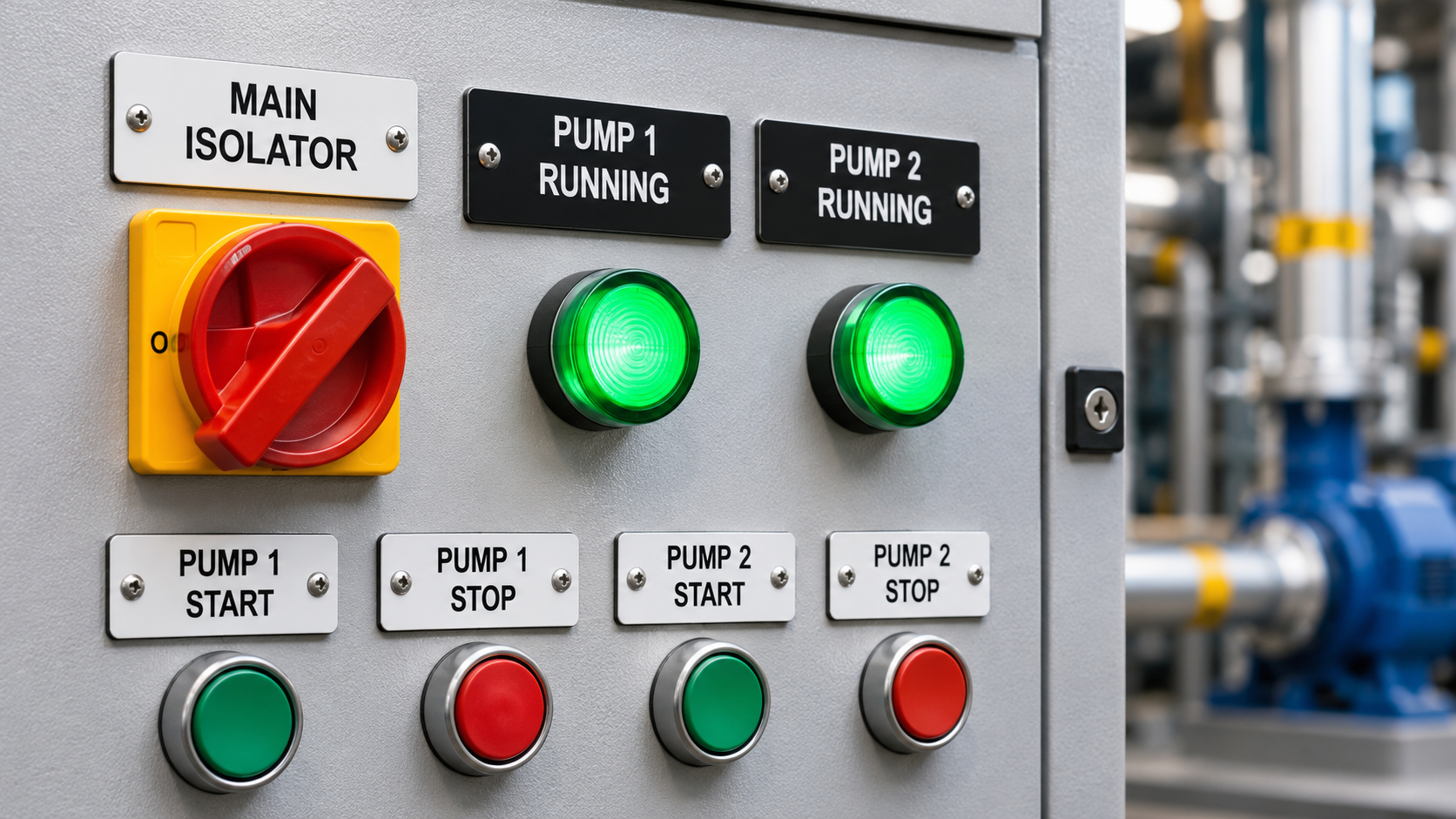
Walk through almost any UK factory, plant room or control room and you will see them: small, crisp, two colour labels that name a switch, a valve or a circuit. Many of them are traffolyte labels. UK manufacturing employs around 2.6 million people and accounts for roughly 42 per cent of the country’s exports, according to Make UK figures reported by The Manufacturer, so a huge amount of equipment depends on clear, permanent identification. This guide explains what traffolyte labels are, where they work best and how to specify them, so you get the right label first time.
What are traffolyte labels?
Traffolyte is a well known trade name for engraved laminate. The material is made from layers of plastic in contrasting colours, for example a black top layer over a white core. A cutter engraves through the top layer, so the lettering shows in the colour beneath. Because the message is cut into the material rather than printed on it, it does not rub away in the way a surface print can.
At Southern United, engraved laminate labels are typically supplied in 1.5mm thickness, which gives a rigid, substantial label that is easy to handle and fix. You will also hear the terms engraved laminate labels, engraved plastic labels and engraved nameplates. In everyday buying they usually mean the same family of products, so it is worth describing what you need rather than relying on the name alone.
Traffolyte or Gravoply?
You may also come across Gravoply, a similar and more modern engraving laminate. It suits slightly different use cases, and it offers greater UV stability, which can make it the better choice where a label sits in strong light. If you are not sure which material suits your application, tell us where the label will live and we will point you towards the right one.
Where traffolyte labels work well in manufacturing
Engraved laminate earns its place wherever a label has to stay readable for years without fuss. These are the places we see it used most often.
- Control panels and switchgear. Clear, permanent circuit and function labels let engineers find the right device quickly and safely. Low voltage assemblies are built to BS EN 61439, and terminal marking follows BS EN 60445, which sets out conductor colours and labels. Engraved labels commonly carry the circuit descriptions and warnings around that marking.
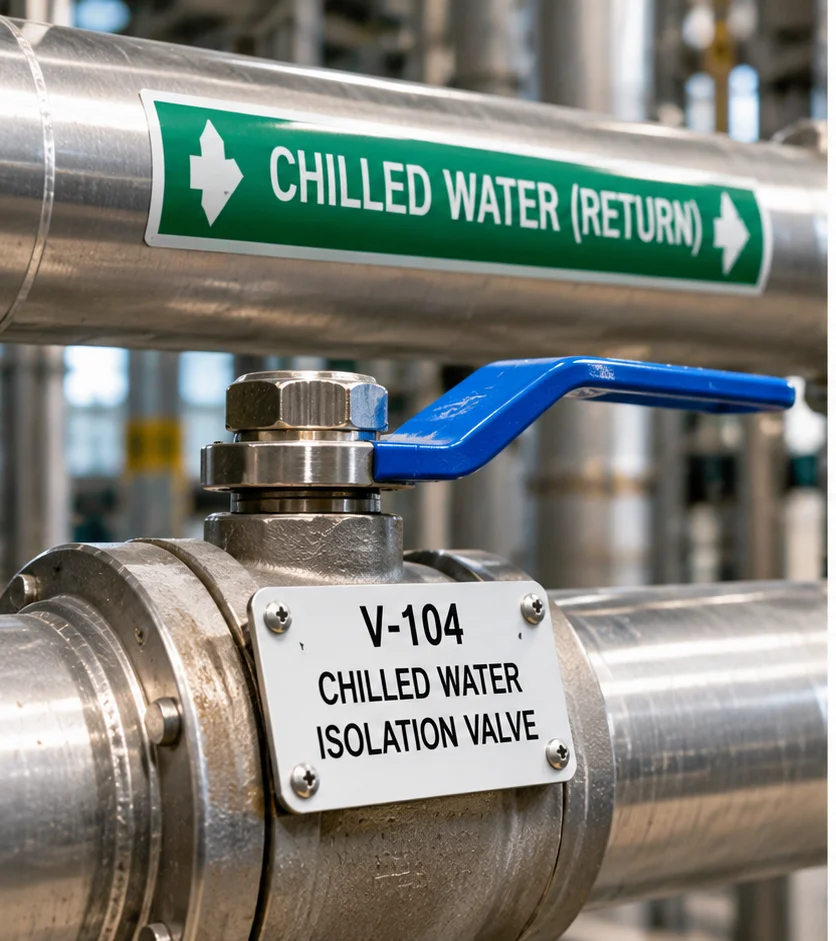
- Valves, pipework and plant. In the UK, pipelines are commonly identified using BS 1710, which covers colour coding, content names and flow direction arrows. Engraved laminate tags are a durable way to label the valves, pumps and equipment that the pipework connects, indoors and in many sheltered outdoor locations.
- Machines and equipment. Operating instructions, isolation points and safety information stay legible through years of handling and cleaning.
- Cabinets, enclosures and racking. Where parts, tools or stock need durable, easy to read identification, an engraved label will outlast most printed alternatives.
Traffolyte labels compared with other options
Engraved laminate is a good all rounder, but it is not always the right answer. For very high temperatures, aggressive chemicals or a need for serialised, traceable marking, a metal nameplate or a printed polyester or polyimide label may serve you better. Our guide to choosing a metal nameplate explains when to step up to metal, and our buyer’s guide to self-adhesive labels covers printed options. If you are comparing materials for heat, our guide to polyester or polyimide labels will help.
Southern United can supply all the options described in this guide, with flexibility on sizes and colour combinations. You can see the full range on our nameplates and self adhesive labels pages.
How to specify traffolyte labels
A good specification saves time and avoids reprints. These are the details that matter most.
- The environment. Indoors or outdoors, the temperature range, and any contact with oil, solvents or cleaning agents.
- The colour combination. Black on white and white on black are common, but your site standard may call for others. Safety related labels often follow a colour convention.
- Character height. Think about how far away the label is read from. A label on a panel door can use smaller text than one on a pump house wall.
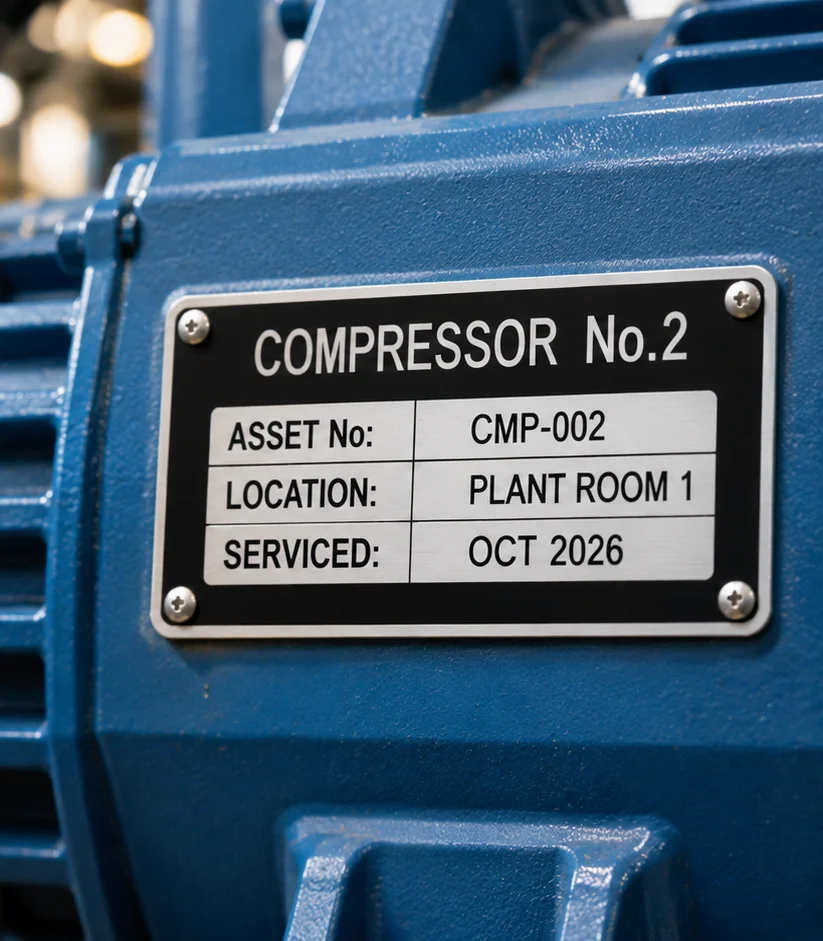
- Size, shape and fixing. Screws, rivets or an adhesive backing each suit different surfaces. Tell us how the label will be fitted and we will suggest the best option.
- Quantity and future needs. Say whether labels will need repeating or adding to later, so wording and sizes stay consistent across a project.
One practical tip: send the wording as a simple schedule, with one row per label and the text exactly as it should appear. Checking the schedule before engraving starts is much cheaper than checking a box of finished labels afterwards. If your project follows a customer or industry standard, tell us which one when you enquire so we can confirm what is needed. You can find out more about how we work on our quality and compliance page.
Keeping labelling consistent across a site
The best labelling schemes feel invisible, because everything is where an engineer expects it to be. Agree a colour convention and a standard character height at the start, use the same wording for the same equipment everywhere, and keep your schedule of labels as a living record. When a panel is extended or a line is modified, you can then order matching labels that look as though they were always there, rather than a patchwork of sizes and styles that slows people down.
Fitting engraved labels
Clean and degrease the surface before using adhesive backed labels, press them down firmly and allow time for the adhesive to bond. For screws or rivets, allow for the fixing holes in the design and avoid over tightening, which can crack the laminate. Tell us how you plan to fit the labels and we can supply them ready to go.
Traffolyte labels across industries
Engraved laminate is not only for heavy industry. It appears in the plant rooms behind commercial premises, on equipment in transport depots and in the workshops and test areas of aerospace and medical manufacturers. Wherever people need to identify a control or a hazard at a glance, a clear, permanent label helps. Our asset tag and industrial label guide shows how engraved labels fit alongside printed ones in a wider identification scheme.
Frequently asked questions
Is traffolyte the same as engraved laminate?
In practice, yes. Traffolyte is a trade name that has become the everyday word for engraved laminate labels.
Will the lettering wear off?
Because the lettering is engraved through the top layer, it is far more durable than surface printing. Like any material, it should be matched to its environment.
How thick are engraved laminate labels?
Our engraved laminate labels are typically 1.5mm thick.
Can traffolyte labels be used outdoors?
Many grades can, but exposure to sun, weather and temperature swings varies. Gravoply offers greater UV stability, so tell us where the label will be used and we will advise on the right material.
Can I order labels for a whole project at once?
Yes. Send us a schedule of wording, sizes and quantities and we can quote for the full set.
Tell us where the label will live, what it needs to survive and how many you need, and we will suggest a specification and quote within one working day. Request a quote or contact our team to talk it through.